






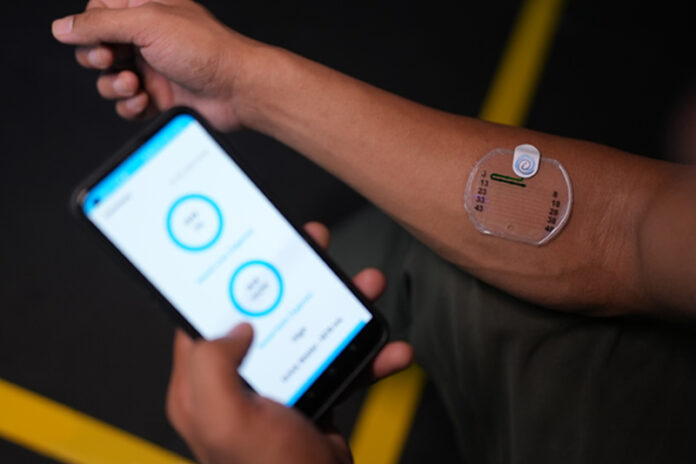
If you’re someone who loves data-driven wellness but dreads needles, the next wave of health tech might feel like a small miracle. Researchers are exploring a future where a soft patch on your arm can read your sweat, interpret it with artificial intelligence, and translate those tiny chemical clues into a clearer picture of how your body is doing.
The idea isn’t that sweat will instantly replace blood tests tomorrow. It’s that sweat could eventually reduce how often we need them, especially for day-to-day tracking. Think of this as the difference between a single snapshot and a continuous story.
Why is sweat suddenly interesting
Sweat has long been treated as background noise of workouts and summer commutes. But scientists now see it as a surprisingly rich fluid that can carry information about hydration, electrolytes, metabolic byproducts and stress-related compounds. What makes sweat especially appealing is its accessibility. It can be collected painlessly and repeatedly, which opens the door to continuous monitoring without clinic visits.
For wellness-focused readers, that matters. So much of modern health is about patterns: how your body responds to stress, sleep, food, training cycles and hormonal shifts across the month. Sweat-based tracking could be one of the few tools designed for real-time pattern recognition.
The AI upgrade
Sweat testing by itself isn’t new. What’s new is the way AI can pull meaning from messy biological signals. Our bodies don’t produce clean, identical data from one hour to the next. AI excels at total-pattern analysis: connecting subtle changes across multiple markers, adjusting for context such as activity and environment, and detecting shifts that may be too faint for older, single-marker approaches.
In plain terms, AI is what turns a sensor into something closer to an intelligent wellness companion.
What these patches may track
The most promising and practical near-term uses sit in the wellness and performance space:
Hydration and electrolyte loss. This is already the most consumer-ready category. These tools can help active people understand sodium loss and sweat rate, which supports smarter hydration plans.
Stress trends. Some prototypes aim to measure cortisol in sweat. If validated at scale, this could give users a gentler way to see whether chronic stress is climbing, stabilizing or improving with lifestyle changes.
Exercise recovery signals. Biomarkers like lactate and uric acid have been explored for performance and fatigue insights. For anyone balancing cardio, strength, and busy life demands, this could offer a more personalized way to avoid overtraining.
Glucose patterns. This is the most talked-about and the most delicate category. Early research suggests correlations between sweat glucose and blood glucose, but consumer devices here still need stronger clinical validation before anyone relies on them for medical decisions.
What’s hype vs. helpful today
Here’s the cleanest way to think about it:
- Helpful now: hydration and sports performance insights.
- Promising but not yet medical-grade: stress and metabolic trend tracking.
- Still emerging: disease screening claims.
Some articles imply that sweat sensors already detect serious diseases with near-clinical accuracy. The more realistic view is that this field is advancing fast, but many applications remain in research or early prototype stages. These technologies may become powerful complements to traditional healthcare, not wholesale replacements.
The real advantages
Even in their current forms, sweat sensors point to a new kind of wellness experience:
Continuous context. Blood tests are incredibly valuable, but they’re episodic. Sweat sensors could eventually show how your body changes across the day, not just what it looked like at 9:00 a.m. in a lab.
Lower barrier to tracking. When tracking becomes painless and easy, people actually do it. That’s especially important for kids, seniors and needle-avoidant adults.
Everyday empowerment. For wellness consumers, this could shift the mindset from reactive health to proactive pattern management.
The challenges researchers are still solving
This is not a finished story. Key hurdles remain:
Variable sweat production. Not everyone sweats the same amount, and your body doesn’t always produce enough sweat at rest for reliable sampling.
Personal variability. Diet, medications, skincare, hormones, climate and even where a patch sits on your body can all shift readings.
Skin contamination and sensor drift. Long-term accuracy is hard. Engineers are improving materials, microfluidics and calibration methods to keep data stable.
Privacy. Any device that generates continuous biochemical data needs strong user protections. If you don’t want a company owning your most intimate health signals, read the fine print before adopting early products.
What this means for the Viva reader
This is where the story becomes exciting for women’s wellness in particular. The future promise isn’t just disease detection. It’s everyday insight: seeing how sleep changes your stress chemistry, how a cycle phase alters recovery, or how certain foods affect energy and cravings via metabolic markers.
For many of us, the most meaningful health breakthroughs are the ones that make self-care feel simpler, less invasive and more intuitive.
How to be an early smart adopter
If you’re curious now:
- Start with hydration-focused patches if you train regularly.
- Treat stress or glucose features as informational trends, not diagnostic truth.
- Look for brands that clearly explain validation, accuracy and data protection.
- Use the insights to support lifestyle changes you can feel, not just numbers you can chase.
FAQ
Can sweat sensors replace blood tests right now?
Not yet. The most reliable consumer use today is hydration and sports performance. Medical-grade applications still need broader clinical validation.
What’s the most practical benefit for everyday users?
Real-time hydration guidance and, potentially soon, stress trend awareness.
Are sweat glucose readings accurate enough for diabetes care?
They’re promising, but not a substitute for standard glucose monitoring unless a specific device is clinically validated and approved for that purpose.
Will these patches become mainstream?
If accuracy, comfort and privacy keep improving, sweat sensing could become a normal part of at-home wellness tracking within the next several years.
Conclusion
AI sweat sensors are part of a larger shift toward gentler, more personalised health tracking. The near future looks strongest in hydration, performance and stress pattern insights. The longer-term vision may include broader metabolic and disease-related applications, but that will depend on careful clinical proof.
For now, the smartest stance is optimistic and informed: enjoy the wellness advantages, respect the limits, and let your sweat become a useful signal, not a definitive diagnosis.